Historische Kupferzeche am Larzenbach
Kupferzeche Larzenbach

Useful Information
| Location: |
Sonnhalb 21, 5511 Hüttau.
E55 exit Hüttau, between Bischofshofen and Altenmark, south of Salzburg. The museum is in the city center in the Gewerkenhaus, an old mine building. (47.420536, 13.312544) |
| Open: |
Kupferzeche Hüttau:
JUN daily by appointment. JUL to AUG daily 10-16. SEP to 15-SEP daily 11, 14. 16-SEP to 14-MAY by appointment. Museum Hüttau: JUL to 15-SEP daily 11-16. [2026] |
| Fee: |
Kupferzeche Hüttau:
Adults EUR 14, Children (6-15) EUR 7, Children (4-5) free. Groups: Adults EUR 10. Museum Hüttau: Adults EUR 6, Children (6-15) EUR 3, Children (4-5) free. Groups: Adults EUR 5. Combi Ticket: Adults EUR 17. [2026] |
| Classification: |
 Copper Mine Copper Mine
|
| Light: |
 Electric Light Electric Light
|
| Dimension: | T=7-8 °C |
| Guided tours: | D=1 h, MinAge=4. |
| Photography: | allowed |
| Accessibility: | no |
| Bibliography: |
G. Kandutsch (2005): Historische Kupferzeche und Mineralienmuseum: Larzenbach und Hüttau im Pongau, Austria Mineralien Magazin Lapis, Jahrgang 30, Ausgabe 5, 2005, pages 40-42. Christian Weise Verlag GmbH, ISSN 0176-1285. 
|
| Address: |
Historische Kupferzeche am Larzenbach, Sonnhalb 21, 5511 Hüttau, Tel: +43-6458-7103, Tel: +43-6458-7232.
E-mail: |
| As far as we know this information was accurate when it was published (see years in brackets), but may have changed since then. Please check rates and details directly with the companies in question if you need more recent info. |
|
History
| 13th century | beginning of mining activities. |
| 1549 | first written account. |
| 1594 | Gewerkenhaus built, which today hosts the museum. |
| 1853 | mining revived for a shor time. |
| 1869 | mining ended. |
| 1989 | start of restauration as a show mine. |
| 1998 | opened to the public. |
| 25-MAY-2003 | Museum Hüttau inaugurated. |
Geology
This copper deposit is rather old, it was deposited 400 Ma ago during the Carboniferous. There are two different copper ores, Kupferkies (chalcopyrite, CuFeS2) with a copper content of about 15% and Fahlerz a copper ore which also contains antimony. The sedimentary layers, once deposited horizontally, where deformed by the Alpine orogeny and have now a dip of about 45°.
The ore is oxidized and dissolved by the dripping water. Oxidized copper has an intensive green colour, and so many green spots can be seen throughout the tour. There are even some green dripstones, when the copper oxide is transported by the water and redeposited.
Description
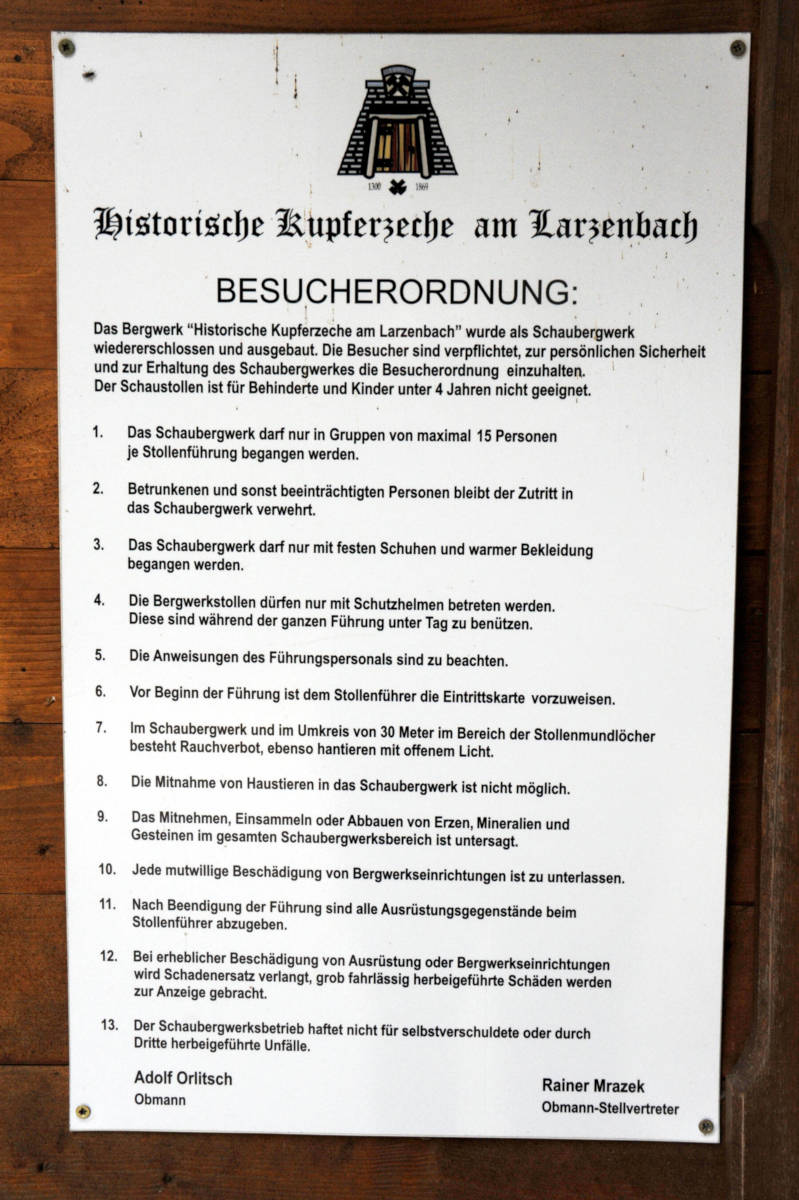


The Historische Kupferzeche am Larzenbach (Historic Copper Mine at Larzenbach) is the show mine. The associated mining museum is named Museum "Erze, Gold und Minerale" (Museum of Ores, Gold and Minerals) and is located in the centre of Hüttau on the third floor of the municipal office. The building is the former Gewerkenhaus, which means that it was the house of the former operators of the copper mine. From here, it is 700 metres to the show mine, which is located north of the Larzenbach valley. Therefore, the name "Copper Mine at Larzenbach" is not a proper name, but merely descriptive. You can visit both separately, but there is also a combined ticket available. Since the coronavirus pandemic, tickets have been available online. Regular guided tours are only available during the summer months; during the rest of the year, the mine can be visited by appointment. What is unusual is that you only need to be a group of three; most show mines and caves only offer such tours for significantly larger groups.
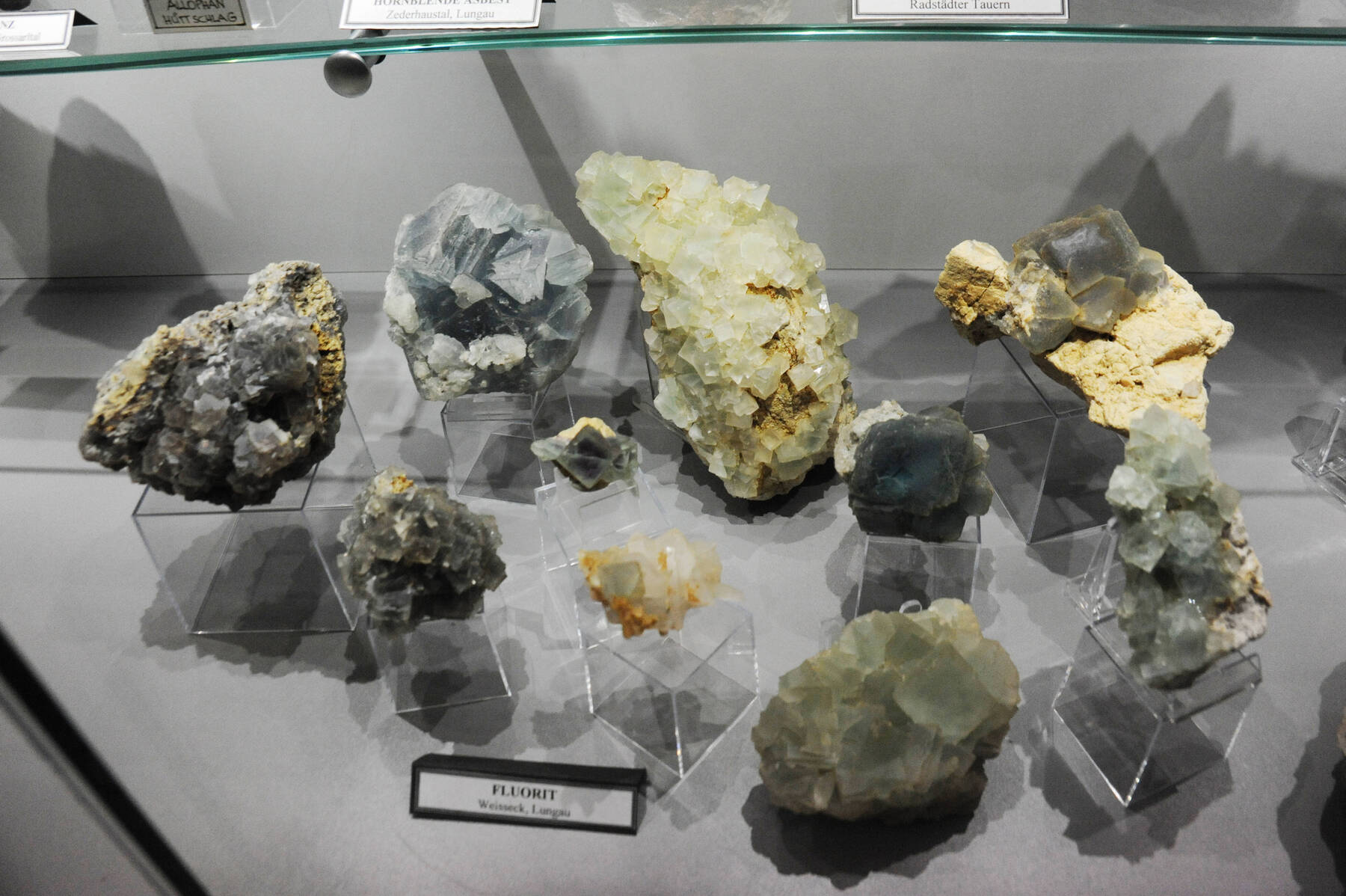
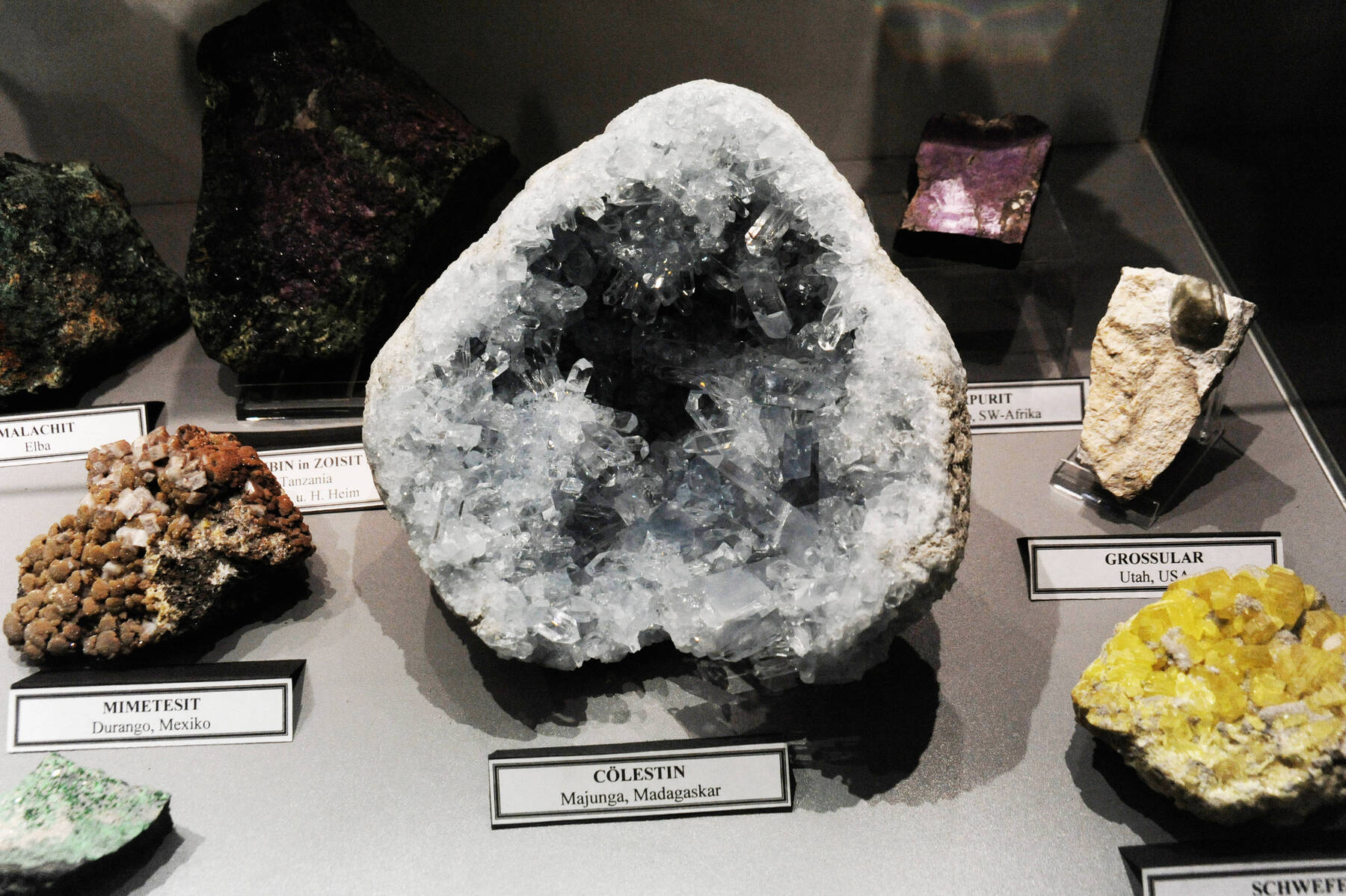
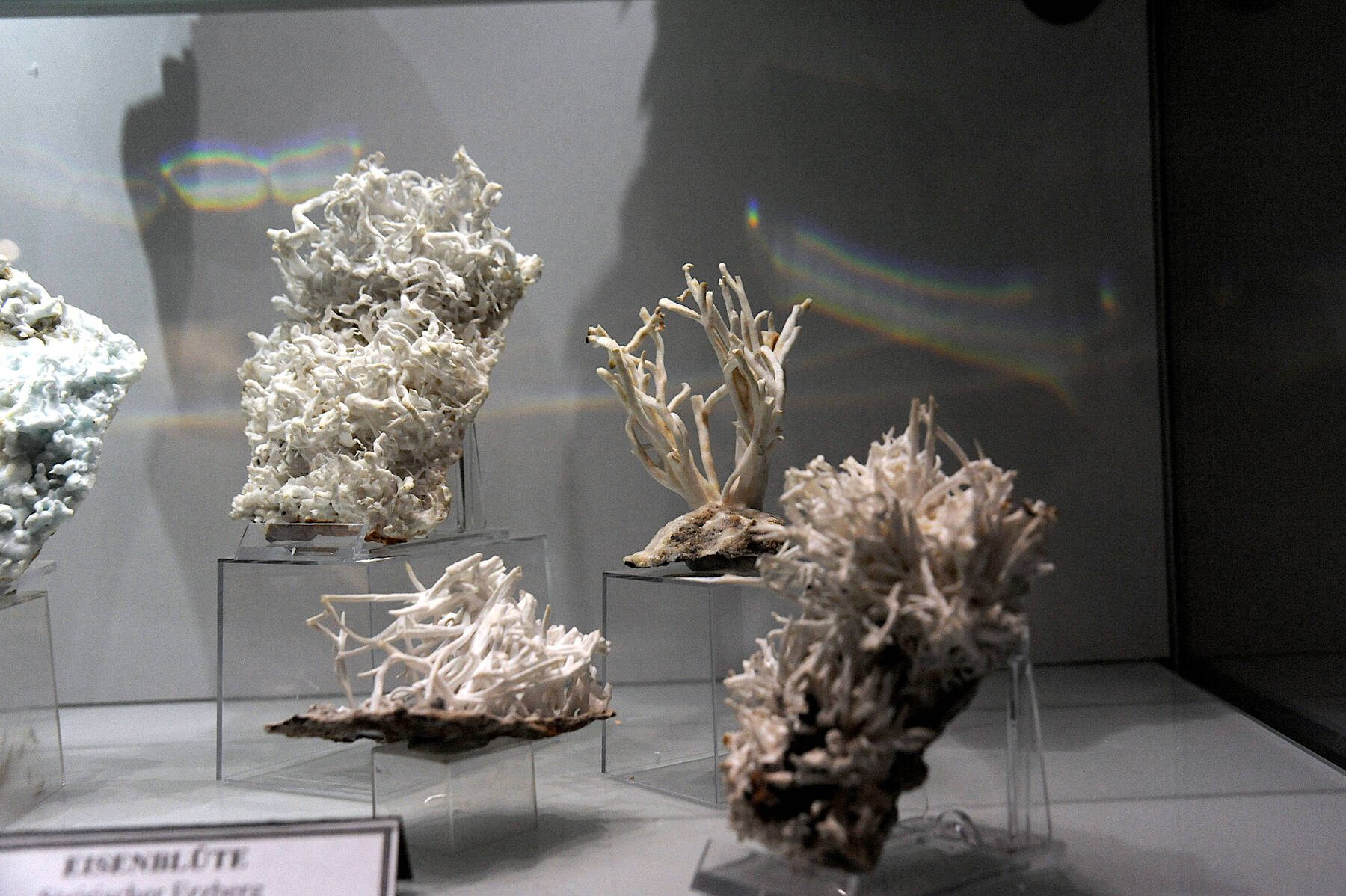
The mining museum explains the history of mining and the methods and tools used, but it is actually an extraordinary mineral collection. Rainer Mrazek is a retired miner and a mineral collector who focused on mining in the province of Salzburg. He was the founder of the museum and the driving force behind the expansion of the copper mine as a show mine. One of the highlights of the collection is probably the most significant gold find in the Eastern Alps.
Copper was mined in this area around 4,000 years ago by the Illyrians and later by the Celts. In the Middle Ages, the mine was of great importance to the region. Mining probably began in the 13th century, but the first documented mention of it is not until 1549. The smelting works where the copper ore was smelted were located in nearby Hüttau, which got its name from this activity. Hütte is the German word for smelter. The heyday was in the 16th and 17th centuries, then taxes rose, the deposits were exhausted and many mines were closed. In the 18th century, mining almost came to a standstill, but was revived one last time in 1853 when the "Larzenbach" copper union was founded and a new mine called Barbara was opened. The crushing plant was located in the valley, and the ore was then transported about 50 km to the imperial and royal smelter in Lend. However, by 1860, all the ore had been mined and mining was interrupted, finally ceasing altogether in 1869.
- See also
 Search DuckDuckGo for "Kupferzeche am Larzenbach"
 Google Earth Placemark: Historische Kupferzeche am Larzenbach
- Google Earth Placemark: Museum Hüttau
 OpenStreetMap
 Historische Kupferzeche am Larzenbach, official website (visited: 14-DEC-2025)
- Hüttau | Museum und Kupferzeche (visited: 14-DEC-2025)
- Schaubergwerk Historische Kupferzeche am Larzenbach (visited: 14-DEC-2025)
 Index
Index Topics
 Hierarchical
 Countries
 Maps
Maps